Anyone interested in wildlife recording and conservation is invited to Stirling on Saturday 14 November for the 35th anniversary conference of The Wildlife Information Centre (TWIC), focussing on the changing face of wildlife recording and conservation in south-east and central Scotland.
TWIC began work in 1991, then known as Wildlife Insite, and now manages over 4.6 million wildlife records for the benefit of organisations and individuals involved in environmental decision-making, education, conservation and research. Councils, land managers and ecologists use the records to check what lives where before decisions are taken on planning, land use and conservation. Almost 250,000 new records were added in the last year, most of them sent in by volunteers.
Its area now covers the Lothians, the Scottish Borders, Stirling, Clackmannanshire, Falkirk and part of Loch Lomond & The Trossachs National Park. The anniversary also marks ten years since TWIC extended its service to Stirling, Clackmannanshire, Falkirk and the National Park, which makes Stirling a fitting place to celebrate.
This year’s gathering features talks ranging from how new dragonfly species are spreading into the south of Scotland to how nature restoration projects are benefiting wildlife around Stirling. Speakers include Dr Richard Milne of the University of Edinburgh on orchids, shifting ranges and changing names; Brian Hickman of the British Dragonfly Society on new arrivals to south-east Scotland, such as the Banded Demoiselle and the Broad-bodied Chaser; Charlotte Neary of the Forth Rivers Trust, with Ilze Brila and Phillip Watts of the University of Jyväskylä, on how wildlife and pathogens are responding to restoration on the Allan Water; and Michelle Pearson of the Howietoun Heritage and Nature Sanctuary on restoring nature at Old Sauchiemill.
TWIC Manager, Natalie Harmsworth said,
“Our annual conference is always a highlight, and this year is particularly special as we celebrate 35 years of recording wildlife. Citizen science is such a great way to discover nature on your doorstep and this year’s gathering shows how everyone’s wildlife-recording efforts can help map the changes to our animals, plants and fungi – including in response to a warming climate.
TWIC Chair, Paul Codd said,
“It has never been more important that the decisions taken by government, councils, land managers and local communities are informed by high-quality, up-to-date biodiversity information. For 35 years TWIC has gathered that information across a large part of Scotland, and it depends on people learning to identify their local plants and animals and telling us what they find. Recording wildlife helps ensure that we stay up to date with changes in species distributions as climate change impacts every aspect of the natural world.”
The event also features the annual Bob Saville Award, presented for an outstanding contribution to biological recording in the TWIC area. It commemorates the late Bob Saville, a key member of the TWIC team for many years and one of the best-known faces in Scottish biological recording. This is the first year the winner has been chosen from nominations made by TWIC members.
In addition to a full conference programme of talks and displays, there’s a book stall and a raffle, with prizes donated by Blair Drummond Safari Park, Edinburgh Zoo, and the Scottish Seabird Centre, among others.
Many thanks to RSK Biocensus and Moray Estates for sponsoring this year’s TWIC conference.
The conference runs from 10am to 4pm at the Stirling Court Hotel, University of Stirling. Tickets cost £30 (£15 for students) and include a buffet lunch. Booking is essential via Eventbrite. TWIC’s AGM takes place during the day; everyone is welcome and members can vote.
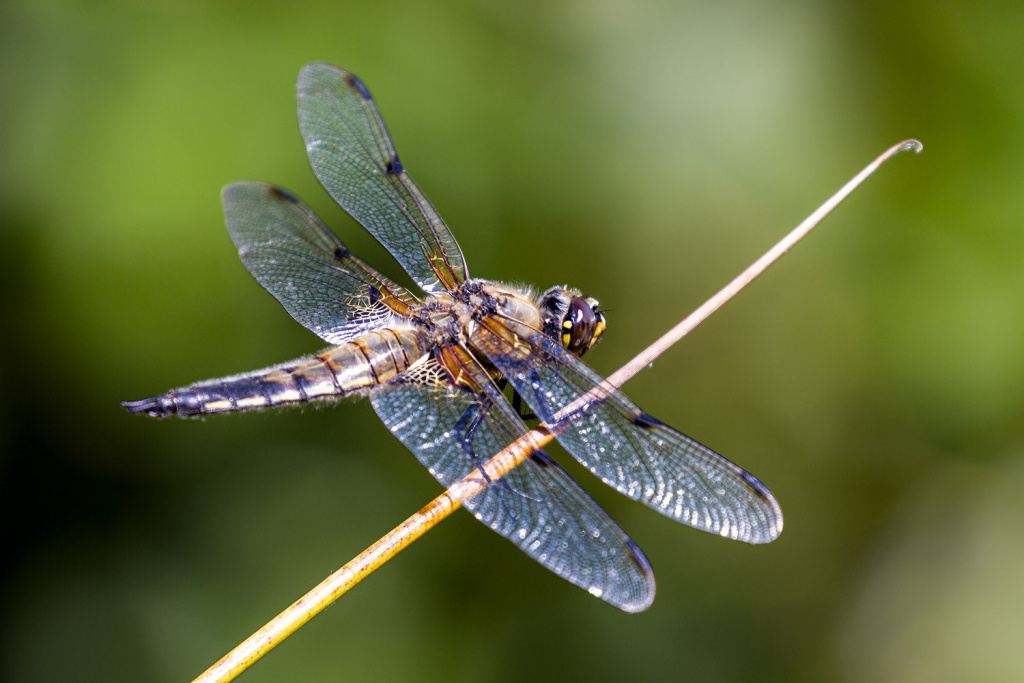
Photo of Four-spotted Chaser (Libellula quadrimaculata) via iRecord by Colin Riach (CC-BY)
TWIC Manager, Natalie Harmsworth, can be contacted for interview on natalie@wildlifeinformation.co.uk and 07818237795.